
A Local’s Guide to Hiring a General Contractor for Remodeling in Atlanta
Deciding to remodel your home is an exciting milestone. Whether you are looking to open up a traditional floor plan in a historic Midtown bungalow, build a custom primary suite oasis in Buckhead, or undergo a complete kitchen transformation in Alpharetta, a major renovation is a significant financial and emotional investment.
Unfortunately, the home improvement industry can feel like a minefield for homeowners. With thousands of search results for remodeling contractors atlanta, sorting through marketing pitches to find a true professional can be overwhelming. Skepticism is entirely natural. You are trusting someone with your hard-earned money and the structural integrity of your sanctuary.
To ensure your vision is realized on time, within budget, and without unnecessary stress, you need a transparent evaluation framework. This local guide outlines the essential pillars of hiring a premier general contractor in Metro Atlanta, provides a screening checklist, and reveals why the design-build model is shifting the landscape of modern home renovations.
1. Verify the Credentials (The Non-Negotiables)
Before you fall in love with a contractor’s past project photos, you must verify their legal and professional status. In the state of Georgia, operating without the proper credentials isn’t just cutting corners—it’s illegal.
Active Licensing
A reputable general contractor must hold an active license issued by the State Licensing Board for Residential and Commercial Contractors. For substantial home structural changes, additions, or high-end renovations, your contractor should hold either a Residential-Basic or a Residential-Light Commercial license.
You can directly check an organization’s status by visiting the Georgia Secretary of State’s office for contractor licensing verification. Verifying this ensures the professional managing your home has passed rigorous trade examinations, completed background checks, and meets continuing education requirements.
Comprehensive Insurance Coverage
If an uninsured worker is injured on your property, or if a structural mistake damages your home, you could be held liable. Demand proof of two distinct types of insurance:
- General Liability Insurance: This protects your property from damage caused during construction. For residential light commercial operations, a baseline of $500,000 per occurrence is standard practice, though premier builders carry significantly higher limits.
- Workers’ Compensation Insurance: Georgia state law mandates that any business employing three or more people must carry workers’ comp. This shields you from financial liability if a crew member or subcontractor is injured on your job site.
Local Insight: Always request that the contractor’s insurance agency send a Certificate of Insurance (COI) directly to your email. A photocopy provided by a contractor could be outdated or canceled.
2. Understand the Two Main Project Delivery Models
The structural and architectural success of your project depends heavily on how your team is organized. Homeowners typically choose between two main structural frameworks: the traditional Architect-Led model and the modern Design-Build model.
Traditional: Design-Bid-Build
In this fragmented approach, you hire an independent architect or interior designer to draw up your remodeling blueprints. Once those drawings are finalized, you send them out to multiple remodeling contractors in Atlanta to gather competitive bids.
While this sounds good in theory, it frequently leads to friction. Architects often design gorgeous spaces without a real-time pulse on current material supply chain costs or local labor rates. When the construction bids come back, homeowners frequently discover that their dream design costs double what they budgeted to build, forcing them back to the drawing board at their own expense. Furthermore, if a problem arises during construction, the architect and the contractor often point fingers at each other, leaving you caught in the middle.
Modern & Streamlined: Design-Build
The design-build methodology unites architectural design, interior selections, engineering, and construction management under a single roof.
When you work with a unified design-build firm, your designer and your field project manager collaborate from day one. Your aesthetic goals are balanced against your target investment level in real time. If a specific material cost spikes, or a structural limitation in an older Atlanta home is uncovered during early exploration, the design is adjusted before construction permits are pulled. This drastically minimizes expensive change orders, maintains a single point of accountability, and ensures a smoother timeline.
3. Vet the Portfolio and Regional Expertise
Atlanta has a remarkably diverse housing stock. Renovation challenges vary wildly depending on your specific neighborhood:
| Neighborhood / Era | Common Remodeling Challenges |
| Midtown / Inman Park / Grant Park (Historic 1920s Bungalows & Victorians) | Navigating strict Historic Preservation regulations, replacing degraded knob-and-tube wiring, leveling settled foundations, and remediating lead or asbestos safely. |
| Buckhead / Sandy Springs (Mid-Century & Traditional Estates) | Maximizing expansive footprints, removing load-bearing walls to achieve modern open-concept spaces, and coordinating complex zoning setbacks. |
| Decatur / Oakhurst (Craftsman & Cottage Homes) | Engineering seamless second-story additions (“pop-tops”) that respect the architectural character of the streetscape while doubling functional square footage. |
When reviewing a contractor’s portfolio, look for projects that match the vintage, architectural style, and scope of your home. A contractor who excels at basic cosmetic upgrades in a newer suburban tract home may struggle with the complex structural realities of a century-old home inside the perimeter (ITP).
4. Crucial Questions to Ask Before Signing a Contract
A professional general contractor will welcome deep scrutiny. During your initial consultation, look past the initial sales pitch and get explicit answers to these operational questions:
- “Who will be on-site managing my project daily?” You need to know if your primary point of contact is a dedicated project manager or if the business owner is bouncing between ten different jobs across Metro Atlanta.
- “What is your process for handling change orders?” Unforeseen issues can hide behind old drywall. Professional builders use a formal, written change-order process that details the exact scope change, material costs, and timeline adjustments before any extra work begins.
- “How do you protect the rest of my home during construction?” Dust mitigation is a hallmark of an experienced builder. Ensure your team uses temporary zip-wall barriers, covers HVAC registers, and utilizes floor protection to keep construction debris out of your living spaces.
- “Can you provide a list of references from projects completed within the last 12 months?” Speaking with recent clients provides an authentic look at a builder’s current communication habits, cleanliness, and scheduling reliability.
Experience the Ponce Design Build Difference
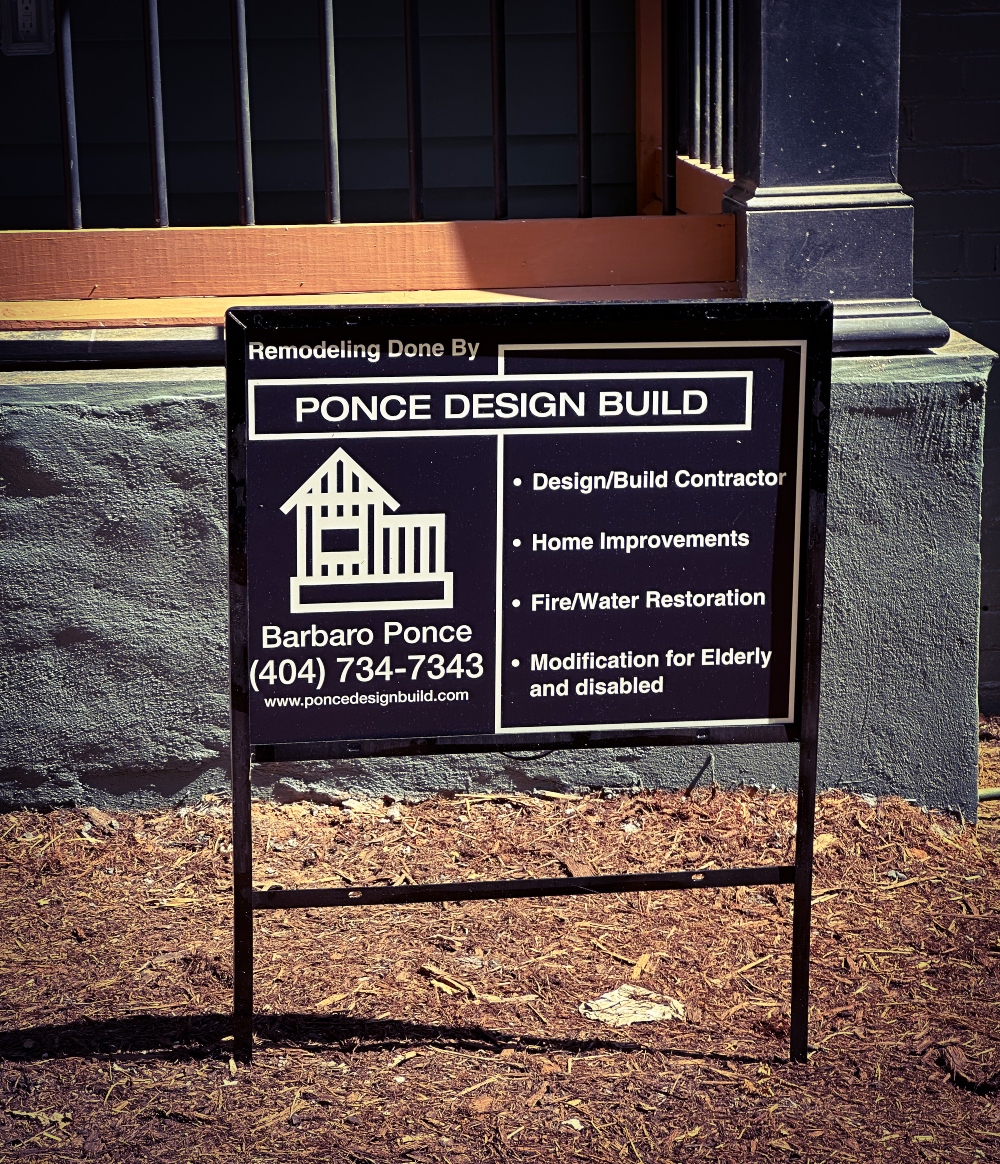
At Ponce Design Build, we understand that home remodeling is deeply personal. We have spent years transforming homes across the greater Atlanta area, building our reputation on absolute transparency, precise communication, and impeccable craftsmanship.
By operating as a fully integrated design-build firm, we eliminate the traditional gaps between architecture and construction. Our team manages every detail of your renovation—from early conceptual space planning and zoning approvals to the final structural walkthrough—providing you with a seamless, stress-free experience.
We believe that an informed client is a successful client. If you are ready to explore what is possible for your home with a team that respects your time, your budget, and your property, we invite you to learn more about us and discover our client-first philosophy.
When you are ready to discuss your specific ideas, share your layout challenges, and get an honest, professional assessment of your upcoming project, reach out to our team to get a quote. Let’s work together to build a space you will love for decades to come.